
How Much Does Custom CRM Development Cost?
Build a defensible CRM budget from scope, migration, integrations, risk and ongoing ownership—not a headline price.
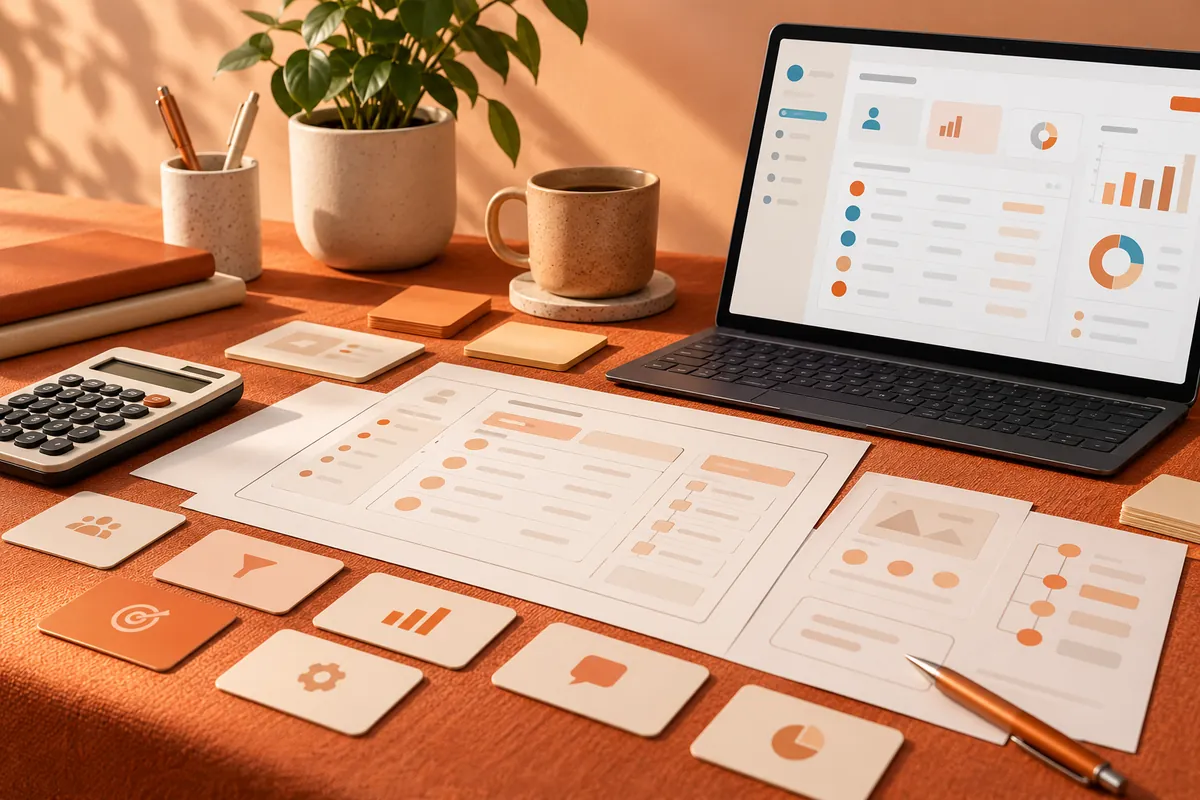
There is no useful single price for a custom CRM without a scope. A contact database with follow-up tasks is a different project from a multi-branch sales platform with financial approvals and live integrations. This guide provides an estimating method, not a market price or an Inphade quotation.
Separate the work packages
Ask for discovery, interface design, core workflows, permissions, integrations, data migration, testing and deployment to be identified separately. State the number of user roles and the rules each role must enforce. A screen count alone misses the complexity behind approvals, ownership changes and reporting definitions.
Estimate uncertainty explicitly
A documented API with a working test account is easier to assess than an undocumented legacy connection. Ask suppliers to identify assumptions, exclusions and work that needs investigation. Where uncertainty is material, commission a bounded discovery task before requesting a fixed implementation price.
For an illustrative comparison, imagine proposal A excludes migration and proposal B includes cleaning and reconciling active customer records. Their totals are not comparable until the migration scope is aligned. The example describes a comparison method; it does not imply typical supplier pricing.
Budget beyond launch
| Budget area | Questions to ask |
|---|---|
| Hosting and services | Who pays, and what grows with usage? |
| Maintenance | Are security updates and dependency work included? |
| Support | What incidents are covered and during which hours? |
| Data ownership | Can you export usable records and attachments? |
| Change | How are new requirements estimated and approved? |
Keep a separate contingency appropriate to the unresolved risks, rather than quietly adding unexplained features to the initial release.
Reduce scope without breaking the process
Preserve one complete enquiry-to-decision journey. Defer secondary dashboards and optional integrations before cutting permissions, backups or acceptance testing. A smaller coherent release is more useful than many half-finished screens.
Request comparable proposals
Provide sample records, stage definitions, integration documentation, migration volumes and acceptance scenarios. Ask every supplier to price the same baseline and state ongoing obligations. Revisit custom versus packaged CRM if the custom work does not address a demonstrable business constraint.
Sources & further reading
Examples and decision frameworks are planning guidance, not guaranteed outcomes. Check current provider requirements before implementation.
Related articles
View all →
CRM & Sales Systems
What Is CRM? A Complete Guide for Growing Businesses
Understand CRM, choose useful features, and plan a rollout around customers, ownership and measurable sales work.
3 min read
CRM & Sales Systems
CRM for Small Businesses: How to Get Started
A small-team CRM rollout: choose a narrow process, clean useful data, assign ownership and test daily adoption.
2 min read
CRM & Sales Systems
Custom CRM vs Off-the-Shelf CRM
Compare workflow fit, implementation effort, ownership, integrations and the practical cost of changing systems.
2 min read