
CRM for Small Businesses: How to Get Started
A small-team CRM rollout: choose a narrow process, clean useful data, assign ownership and test daily adoption.
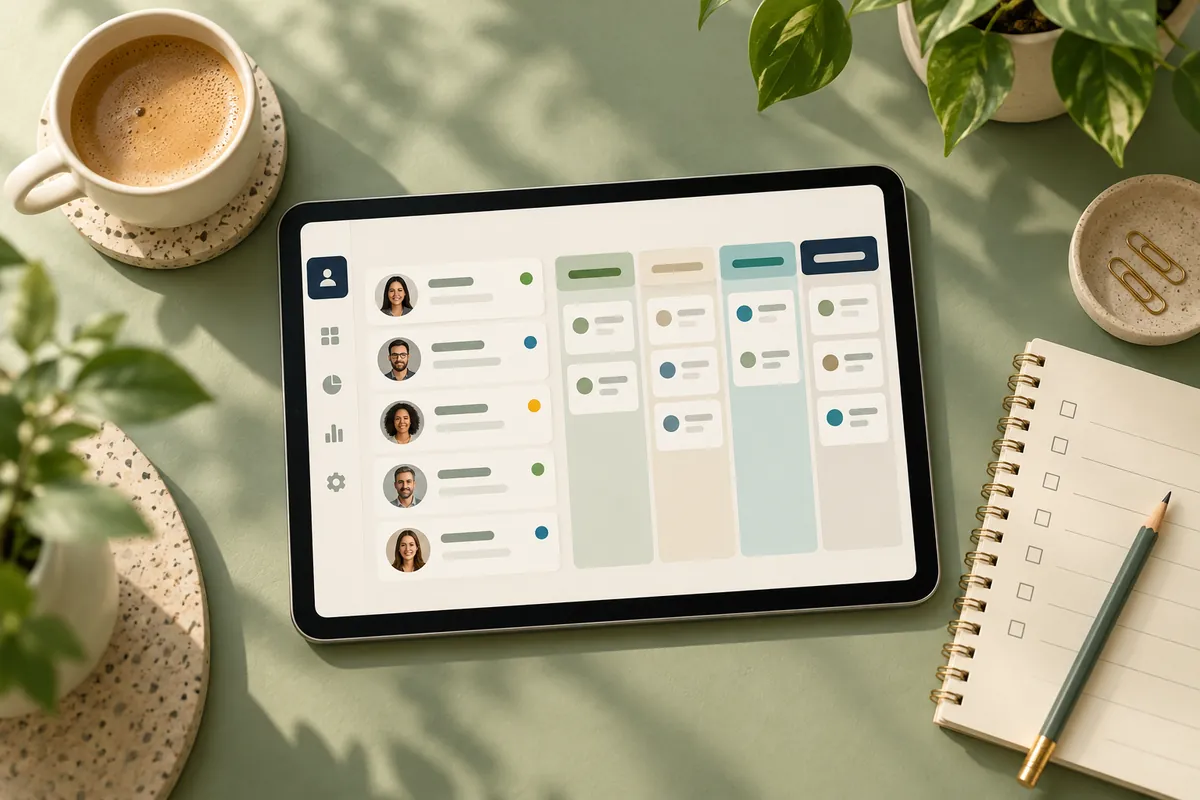
A small business does not need to digitise every customer process at once. Start with the moment where information is repeatedly lost: an unanswered enquiry, a forgotten quotation or a handover between colleagues. A CRM pilot should make one of those problems easier to control.
Define one workflow and one owner
Write down how an enquiry becomes a qualified opportunity, a quotation and a decision. Specify who updates each stage and what evidence is required to move forward. A person requesting a price is not automatically ready to buy. Use stages your team can distinguish without guessing.
Name a process owner who can answer questions and resolve inconsistent records. This is a business responsibility, not just an IT role. Avoid making the pilot dependent on a colleague who has no time allocated to maintain it.
Begin with useful, clean data
Import active contacts and open opportunities first. Deduplicate phone numbers and email addresses, mark records that need checking, and preserve the original export. Do not assume that years of outdated contacts are an asset. Decide what historical information the team actually needs to do its current work.
Keep mandatory fields limited: contact method, source, owner, stage and next action are a reasonable starting proposal. Add fields only when someone uses them to make a decision or fulfil an operational requirement.
Test a complete working day
Use a hypothetical enquiry to test assignment, a missed call, a quotation revision and a staff absence. Can another colleague find the last conversation? Can a manager reassign the opportunity? Test on the phones and laptops the team already uses, not only the vendor's demonstration device.
Roll out without creating parallel systems
Choose a cutover date and make the CRM the agreed place for new opportunities. Keep old files read-only when practical so people do not maintain competing versions. Provide a short task-based guide rather than a long tour of every screen.
Track overdue follow-ups and records missing owners each week. Ask users which fields slow them down. If a report requires data nobody can enter reliably, simplify the process before buying more automation.
Decide what to expand
After the pilot, compare the same measures against the baseline. Expand into integrations only when record quality and ownership are stable. Read the sales pipeline guide before adding automatic reminders: unclear stages produce noisy reminders rather than better sales work.
Sources & further reading
Examples and decision frameworks are planning guidance, not guaranteed outcomes. Check current provider requirements before implementation.
Related articles
View all →
CRM & Sales Systems
What Is CRM? A Complete Guide for Growing Businesses
Understand CRM, choose useful features, and plan a rollout around customers, ownership and measurable sales work.
3 min read
CRM & Sales Systems
Custom CRM vs Off-the-Shelf CRM
Compare workflow fit, implementation effort, ownership, integrations and the practical cost of changing systems.
2 min read
CRM & Sales Systems
How Much Does Custom CRM Development Cost?
Build a defensible CRM budget from scope, migration, integrations, risk and ongoing ownership—not a headline price.
2 min read